



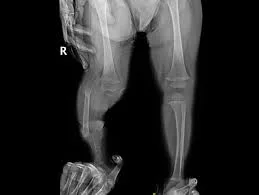
Tibial hemimelia is a rare congenital anomaly characterized by partial or complete failure of the shin bone (tibia) to form during development in the womb, leading to severe shortness of the leg and joint curvatures. Thanks to modern pediatric orthopedic approaches, today, instead of amputation, the limb can be successfully preserved with reconstructive surgeries in which the fibula bone is transferred and computer-assisted leg lengthening surgeries. Prof. Dr. With his advanced surgical experience in the treatment of congenital tibia deficiency and complex limb shortness, Cengiz Çabukoğlu enables children to walk into the future with balanced, healthy and independent steps on their own legs.
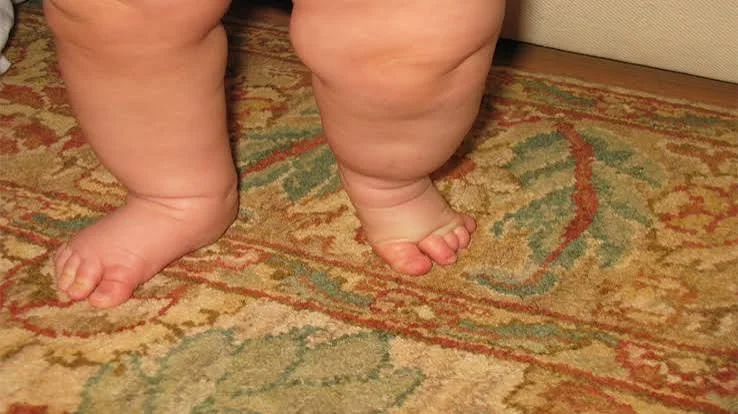
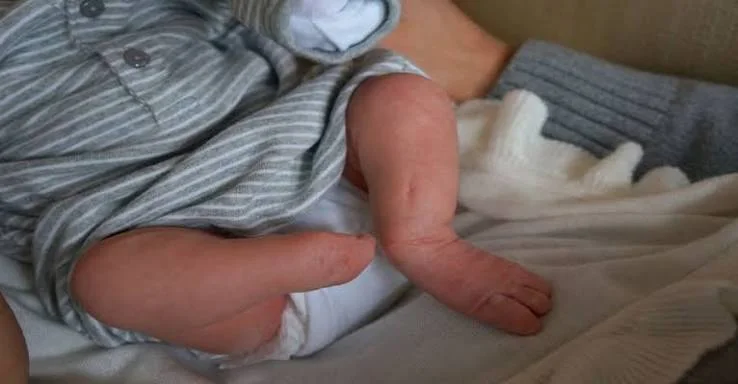
Among childhood musculoskeletal system diseases, the most complex and requiring high-level expertise are congenital anomalies that occur during the development process in the womb. Tibial hemimelia, one of these rare anatomical disorders, is a condition in which the tibia bone, popularly known as the tibia, is congenitally partially or completely missing. This deficiency in the main load-bearing bone of the lower extremity (leg) leads to the need for serious leg shortness surgery in children, severe inward rotations in the ankle, and ligament deficiencies in the knee joint. This condition, which directly disrupts the developmental process, should be handled with a multifaceted approach by a pediatric orthopedist who is deep in this field, from the moment of birth. In a baby born with tibial hemimelia, the size and type of the problem is completely individual. In some cases, only the ends of the tibia are not formed, while in others, the bone is completely absent and this may be accompanied by short femurs and missing fingers on the foot. When the baby grows and tries to stand up and enter the walking cycle, the load-bearing biomechanics and balance of the existing limb become completely inadequate. For this reason, detailed clinical examinations, orthopedic radiographs and, if necessary, advanced imaging methods in early infancy are of vital importance in determining the functional potential of the leg and creating an accurate treatment schedule. In the past years, when it came to the treatment of tibial hemimelia, direct amputation of non-functional limbs and directing the child to a prosthesis at an early age were one of the most frequently used methods. However, thanks to technological revolutions in today's modern pediatric orthopedics and reconstructive bone surgery, limb-preserving and limb-reconstructive operations have come to the fore. If the child has knee injuries




 Çerez Tercihleri