



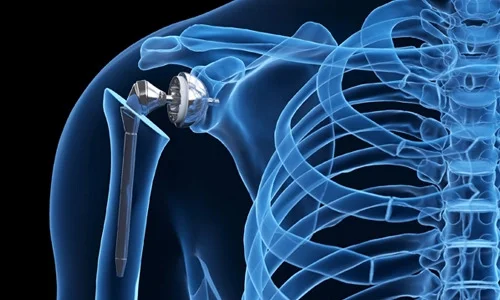
Prosthetic Surgery
Category Orthopedics
Other prosthetic surgery; It is the treatment of damage caused by arthritis and trauma in joints such as shoulders, elbows and ankles with artificial joints.
What is the problem?
While hip and knee replacements are often the first to come to mind when hearing of joint replacement surgery (arthroplasty) in orthopedics, other mobile joints—such as the shoulder, elbow, and ankle—can also suffer severe wear and tear over time.
The category of "Other Joint Replacement Surgeries" encompasses procedures designed to replace joint surfaces that have lost their function due to advanced osteoarthritis (arthrosis), severe cartilage damage, or traumatic injuries. These damaged surfaces are replaced with artificial components crafted from specialized metal alloys and high-grade polyethylene. The primary objective is to eliminate joint pain completely and restore functional mobility.
What are the symptoms?
Structural damage in the shoulder, elbow, or ankle that necessitates joint replacement surgery presents with the following characteristic symptoms:
Severe and Chronic Pain: Joint pain that persists even at rest, awakens you from sleep at night, and significantly interferes with daily activities.
Marked Loss of Motion: Inability to raise the arm above shoulder height, difficulty fully bending or straightening the elbow, or stiffness in the ankle that severely restricts walking.
Grinding and Catching Sensations: A distinct grinding feeling, audible crepitus, or locking within the joint during movement.
Deformity and Swelling: Persistent fluid accumulation around the joint, chronic edema, and visible deformities caused by bone spurs and structural wear.
What causes it?
Primary Osteoarthritis (Age-Related Wear): Natural wear and tear of the joint cartilage over time.
Post-Traumatic Arthritis: Damage to the cartilage structure following severe intra-articular fractures or dislocations caused by past accidents, trauma, or sports injuries.
Inflammatory Arthritis: Systemic conditions such as Rheumatoid Arthritis or Ankylosing Spondylitis that progressively erode and destroy joint cartilage.
Avascular Necrosis: Collapse of the bone structure (such as the humeral head in the shoulder) due to a localized disruption of blood supply.
Irreparable Muscle/Tendon Tears: Advanced joint degradation stemming from long-standing, untreated rotator cuff tears in the shoulder (Rotator Cuff Arthropathy).
How is it diagnosed?
A precise diagnostic evaluation is essential for accurate joint replacement planning:
Orthopedic Examination: The specialist evaluates tender points, muscle strength, and active/passive range of motion within the joint.
Plain Radiography (X-Rays): The primary and most critical imaging modality used to assess joint space narrowing, bone wear, and overall bone quality.
Computed Tomography (CT) Scan: Utilized to analyze bone stock in 3D prior to surgery and to calculate the exact alignment and positioning for the prosthetic components.
Magnetic Resonance Imaging (MRI): Requested to evaluate the condition of surrounding muscles, tendons, and ligaments—particularly crucial for shoulder and ankle assessments.
Treatment methods
Directly proceeding to joint replacement surgery is rarely the first step; conservative (non-surgical) options are fully explored initially:
Medications and Injections: Pain management, along with intra-articular hyaluronic acid or Platelet-Rich Plasma (PRP) injections, is utilized to alleviate symptoms and delay surgical intervention.
Physical Therapy: Targeted exercises are prescribed to strengthen surrounding muscles and reduce the load on the affected joint.
Total or Partial Joint Replacement Surgery: When conservative treatments fail to provide relief, the damaged joint surfaces are surgically prepped and replaced with shoulder, elbow, or ankle prostheses tailored to the patient's anatomy. In shoulder cases, either an Anatomic or Reverse Shoulder Arthroplasty is selected depending on the integrity of the rotator cuff muscles.
Is surgery required?
Yes. In advanced stages where cartilage is completely worn away, bone rubs against bone, and the patient's quality of life is severely compromised, joint replacement surgery is the definitive and lasting solution.
Prosthetic surgery is an elective procedure; therefore, the patient's pain tolerance and the degree of functional limitation in their daily life are the most decisive factors in making the decision to operate.
Recovery process
The recovery timeline varies depending on the specific joint replaced. Following shoulder and elbow joint replacement surgeries, patients wear a specialized sling for the first few weeks, though finger and wrist exercises begin immediately. In ankle replacement cases, non-weight-bearing with crutches or protective walking boots is required for several weeks until proper bone integration is achieved.
Passive range-of-motion exercises, initiated shortly after surgery (typically on day two), form the cornerstone of the rehabilitation process. With a structured physical therapy program, patients generally regain fully active, pain-free function of the operated limb within 3 to 6 months.
Frequently asked questions
Reverse shoulder prosthesis is a special prosthesis design applied in cases where the main rotator muscles (rotator cuff) around the shoulder are completely torn and cannot be repaired. It works with a mechanism opposite to normal anatomy, using the deltoid muscle to lift the shoulder. It generally gives excellent results in patients with calcification due to muscle tears at an advanced age.
The lifespan of new generation ankle prostheses produced with modern technology is on average between 10 and 15 years, depending on the intensity of use, bone quality and weight of the patient. In order to prolong the life of the prosthesis, it is necessary to avoid carrying heavy loads and heavy sports that will impact the joint after surgery.
The first 4-6 weeks after surgery are a period of protection and light exercise. Patients can usually do daily activities such as personal care, writing and light desk work comfortably after the 6th week. Driving and returning to jobs that require more active strength are planned after the third month, depending on the state of muscle strength.
Video
Appointment and information for Prosthetic Surgery
Contact us with your questions about the treatment process; we will arrange the most suitable appointment together.
 Çerez Tercihleri