



Tumor Surgery
Category Orthopedics
Orthopedic tumor surgery; It is the process of surgically removing benign or malignant masses formed in bones, muscles and joints while preserving limb functions.
What is the problem?
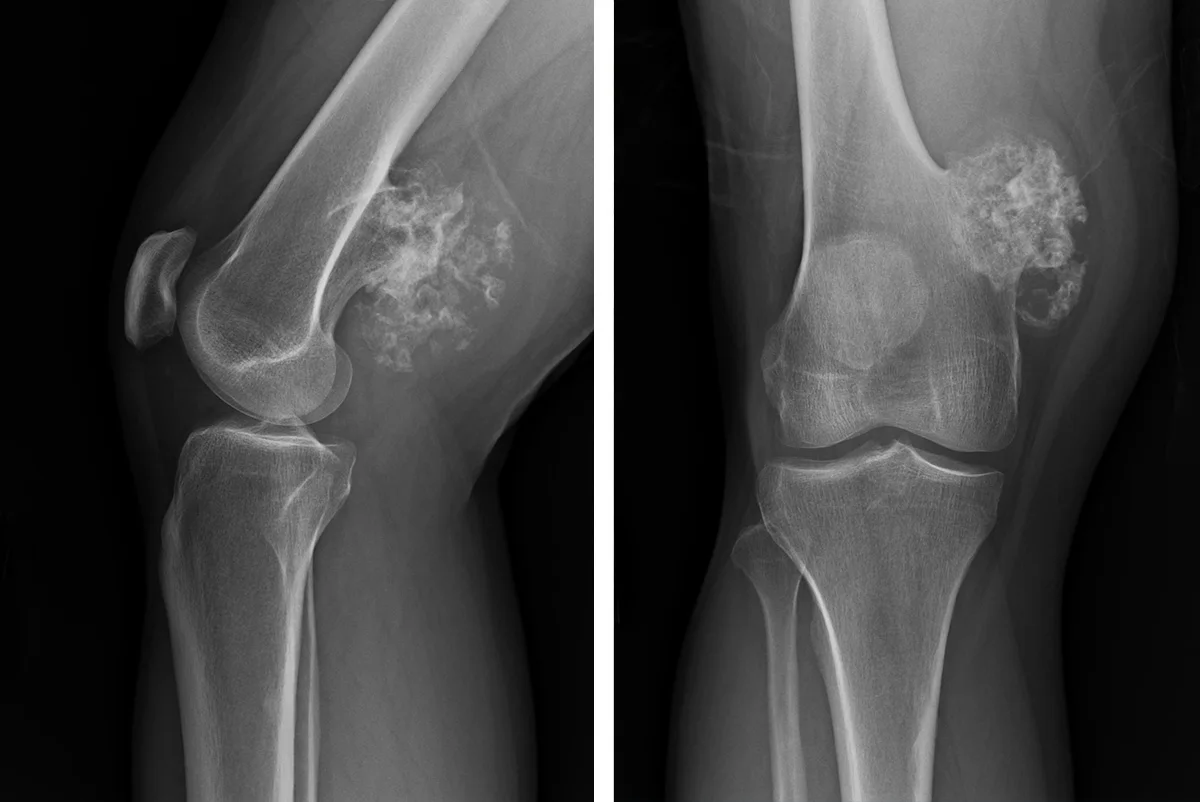
Orthopedic tumor surgery (orthopedic oncology) is a highly specialized subspecialty of orthopedics that focuses on the diagnosis and surgical management of benign and malignant (cancerous) tumors arising in the musculoskeletal system, including bone, muscle, cartilage, fibrous tissue, and blood vessels.
In addition to primary bone cancers (such as Osteosarcoma and Ewing Sarcoma) and soft tissue sarcomas, this field also addresses metastatic bone disease—cancers that have spread to the bone from other organs (such as the lungs, breast, or prostate). The primary objective is to achieve complete oncologic resection of the tumor while preserving the patient's limb and functional mobility whenever possible (limb-salvage surgery).
What are the symptoms?
Bone and soft tissue tumors can progress insidiously in their early stages. The most common symptoms include:
Persistent and Progressive Pain: Deep bone pain that typically awakens the patient at night, does not subside with rest, and fails to respond to standard analgesics.
Palpable Mass or Swelling: A progressively enlarging swelling—sometimes tender, sometimes completely painless—located over a bone or within muscle tissue.
Pathological Fractures: Sudden bone fractures caused by minor trauma, or occurring spontaneously without any injury, due to the tumor weakening the bone structure.
Restricted Joint Mobility: Difficulty in moving the joint or walking with a limp when the tumor is located near a joint.
Systemic Symptoms: In malignant cases, these local signs may be accompanied by generalized fatigue, unexplained weight loss, and low-grade fever.
What causes it?
The precise causes of orthopedic tumors are not yet fully understood in medical science. This condition, which results from the uncontrolled and abnormal proliferation of cells, may be driven by several underlying risk factors:
Genetic Predisposition: Certain hereditary syndromes (such as Li-Fraumeni syndrome, retinoblastoma, or neurofibromatosis) significantly increase the risk of tumor development.
Radiation Exposure: A history of high-dose radiation therapy administered to a specific region for previous cancer treatments.
Cellular Mutations: Random DNA mutations occurring during cell division during periods of rapid bone growth, such as childhood and adolescence.
How is it diagnosed?
To eliminate margin of error, the diagnosis of orthopedic tumors follows a multidisciplinary and step-by-step approach:
Radiological Imaging: Initial plain X-rays reveal structural bone damage. Computed Tomography (CT) scans are utilized to evaluate the intramedullary extent of the tumor within the bone, while Magnetic Resonance Imaging (MRI) is essential for precisely mapping its relationship with surrounding soft tissues, nerves, and blood vessels.
Bone Scans and PET-CT: Whole-body imaging scans are conducted to determine whether the tumor has metastasized to other bones or distant organs.
Biopsy (Definitive Diagnosis): A tissue sample is extracted using closed (needle biopsy) or open techniques to determine whether the tumor is benign or malignant, as well as to identify its specific histological subtype. Biopsy is the most critical step in tumor surgery and must be performed or directly planned by the orthopedic oncology specialist who will conduct the definitive surgical procedure.
Treatment methods
The treatment plan is determined collaboratively by multidisciplinary oncology boards based on whether the tumor is benign or malignant, its stage, and the patient's age:
Treatment for Benign Tumors: The mass may simply be monitored with periodic imaging, or surgically scraped out from within the bone (curettage) and the resulting cavity filled with bone cement or bone grafts.
Combined Therapy for Malignant Tumors: Preoperative chemotherapy and/or radiation therapy are often administered to shrink the tumor. Subsequently, surgical resection is performed with clear, tumor-free margins. Adjuvant (postoperative) chemotherapy is then continued to prevent recurrence.
Is surgery required?
For virtually all malignant (cancerous) bone and soft tissue tumors, surgical intervention serves as the core and most essential pillar of treatment. In contrast, small, benign tumors that show no tendency to grow and pose no risk of structural bone fracture can often be managed non-surgically through regular monitoring.
However, even benign masses require surgical excision if they cause persistent pain, restrict joint mobility, or weaken the bone structure to the point of creating a fracture risk.
Recovery process
The recovery period following orthopedic tumor surgery varies depending on the complexity of the resection and the reconstruction method utilized. When large defect sites are reconstructed using tumor endoprostheses, joint fusion procedures (arthrodesis), or vascularized bone autografts, complete osseous integration can take several months.
Patients are typically mobilized under the guidance of a physical therapist shortly after surgery (usually on the second or third post-operative day). Because systemic chemotherapy often continues after surgery for malignant tumors, full recovery and return to active daily living span a comprehensive period of 6 to 12 months. Throughout this recovery phase, professional oncological rehabilitation (physical therapy) is crucial to maintain muscle strength and restore optimal joint function.
Frequently asked questions
No, in today's modern orthopedic oncology surgery, treatment is performed without amputation in more than 90-95% of cases. Thanks to "Limb Preserving Surgery" techniques, advanced chemotherapy drugs and high-tech tumor prostheses, the tumor bone is safely removed and artificial joints are placed in its place, thus completely protecting the patient's arm or leg.
There is a misconception among the public that "if the knife touches the tumor, it will spread". With the correct technique, the risk of tumor spread in needle biopsies performed by an experienced orthopedic tumor surgeon is almost non-existent. Since the surgeon will completely remove the biopsy needle path along with the tumor later in the actual surgery, there is no risk. Biopsy is mandatory for definitive diagnosis and correct treatment.
Most benign bone tumors (for example, simple bone cysts or osteochondromas) are completely harmless and do not directly develop into cancer. However, although very rare, some benign masses (for example, giant cell bone tumor or multiple cases of osteochondromatosis) may have a risk of changing structure or recurrence in the following years. For this reason, it is recommended that benign masses remain under the follow-up of pediatric/adult orthopedics.
Video
Appointment and information for Tumor Surgery
Contact us with your questions about the treatment process; we will arrange the most suitable appointment together.
 Çerez Tercihleri