



Arthroscopy
Category Orthopedics
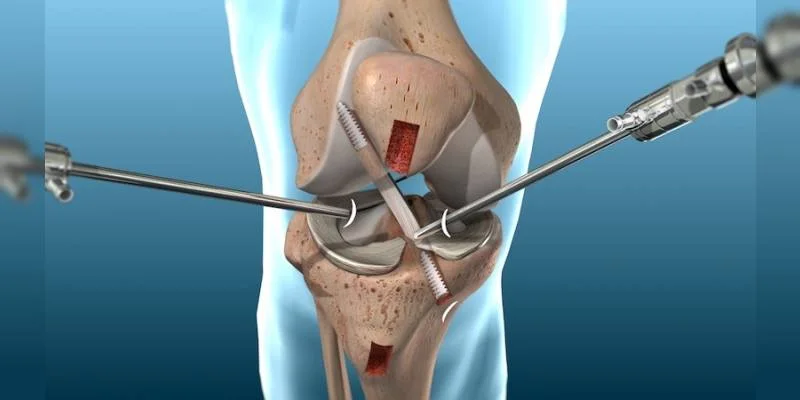
Arthroscopy is a closed, comfortable surgical method in which joint diseases are diagnosed and treated by entering through small incisions with camera systems.
What is the problem?
Arthroscopy is a minimally invasive (closed) surgical procedure used to diagnose and treat structural joint problems, cartilage damage, and ligament or tendon tears. Literally meaning "to look inside the joint," the procedure utilizes a thin, lighted tube equipped with a high-definition camera called an arthroscope.
Frequently performed by orthopedic surgeons on the knee, shoulder, ankle, hip, and wrist, arthroscopy avoids large incisions, minimizing damage to surrounding tissues and subjecting the patient to minimal surgical trauma.
What are the symptoms?
The primary symptoms indicating damage to tissues such as cartilage or menisci—and signaling the need for arthroscopic (minimally invasive) joint surgery—include:
Chronic Joint Pain: Pain that persists despite rest or medication.
Catching or Grinding Sensations: Audible crepitus or a distinct catching feeling within the joint during movement.
Joint Locking and Limited Range of Motion: Sudden locking of the joint or an inability to fully bend or straighten it.
Persistent Swelling and Tenderness: Recurrent joint effusion, swelling, and localized tenderness due to fluid accumulation.
Instability and Giving Way: A sensation of insecurity or the joint "giving way," particularly when negotiating stairs or under weight-bearing loads.
What causes it?
The factors causing joint damage severe enough to require arthroscopic surgery are typically traumatic or degenerative in nature:
Sports Injuries and Trauma: Meniscal tears, anterior cruciate ligament (ACL) ruptures, and tendon injuries resulting from twisting, sprains, falls, or direct impacts.
Age-Related Degeneration: Early-stage osteoarthritis, cartilage wear, and loose bone or cartilage fragments ("joint mice") caused by repetitive joint use over the years.
Repetitive Stress: Engaging in heavy manual labor or performing movements that consistently place asymmetrical loads on the joint.
How is it diagnosed?
Before deciding on arthroscopy, the patient's complaints are carefully evaluated alongside a detailed orthopedic examination. The following steps are taken for definitive diagnosis and surgical planning:
Clinical Examination: The specialist performs targeted physical tests to evaluate joint ligament stability, range of motion, and specific points of tenderness.
Plain Radiography (X-Rays): Obtained as a first-line study to assess bone alignment and evaluate the extent of osteoarthritis.
Magnetic Resonance Imaging (MRI): The gold-standard imaging modality that provides clear visualization of soft tissues—such as menisci, ligaments, tendons, and cartilage—and refines the strategy for arthroscopic surgery.
Treatment methods
Arthroscopy serves both diagnostic (diagnostic arthroscopy) and therapeutic purposes. Typically performed under local, regional, or general anesthesia, the procedure involves inserting specialized instruments through a few tiny 0.5 cm incisions around the joint to perform the following interventions:
Tear Repair: Torn menisci, shoulder rotator cuff tendons, or labral tissues are repaired using specialized suture anchors and fixation devices.
Ligament Reconstruction: Ruptured structures, such as the anterior cruciate ligament (ACL), are reconstructed using tendon autografts or allografts.
Cartilage Management: Damaged cartilage surfaces are smoothed (debridement/shaving), new cartilage growth is stimulated via microfracture techniques, or loose bodies are removed from the joint space.
Is surgery required?
Yes. Arthroscopy is inherently a minimally invasive (closed) surgical procedure. However, it is not the immediate first resort for every instance of joint pain.
Arthroscopy is applied as a definitive and effective solution for patients who have not benefited from conservative (non-surgical) methods—such as medication, intra-articular injections (PRP, hyaluronic acid), and physical therapy—and whose MRI scans clearly indicate tears or ruptures requiring surgical repair.
Recovery process
Because arthroscopy is a minimally invasive technique, the recovery process is significantly faster and more comfortable compared to open surgery. Without large incisions, postoperative pain is kept to a minimum, and the risk of infection is remarkably low.
Patients are typically discharged on the same day or the day following surgery. Depending on the procedure performed—such as a simple meniscal debridement—the patient may be able to bear full weight and walk within a few days. In cases involving ligament reconstruction or suture repairs, the use of crutches or a protective brace may be necessary for several weeks.
Initiating an early-phase physical therapy and rehabilitation program post-surgery is the most critical component of the recovery process, ensuring the joint regains its former strength and full range of motion.
Frequently asked questions
Large incisions are not made in arthroscopy surgery. The joint area is entered through 2 or 3 small holes, approximately 0.5 cm wide, through which only the camera and surgical instruments can enter. These small holes are usually closed with a single stitch at the end of the surgery. Therefore, when the healing is completed, there will be no aesthetically disturbing scar, and over time, the lines will become almost completely blurred.
The time it takes to return to normal life varies depending on the extent of the intervention to the joint. Patients who only undergo cartilage cleaning or meniscus shaving can return to their desk jobs and daily routines within 1-2 weeks. However, in cases where tissue healing is expected, such as anterior cruciate ligament reconstruction or meniscus stitching, full return to active work and social life may take 4 to 6 weeks.
The biggest advantages compared to open surgeries are; This is due to the fact that healthy tissues are not damaged, post-operative pain is much less, the hospital stay is short and the risk of infection is minimal. In addition, joint range of motion is regained much faster and the patient is protected from muscle loss by being mobilized in the early period.
Video
Appointment and information for Arthroscopy
Contact us with your questions about the treatment process; we will arrange the most suitable appointment together.
 Çerez Tercihleri