



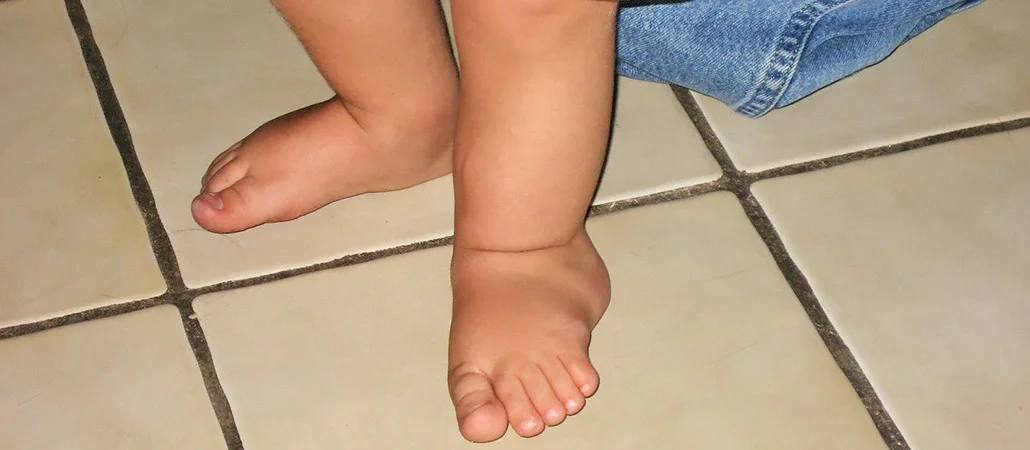
Fibular Hemimelia
Category Pediatric Orthopedics
Fibular hemimelia is an anomaly characterized by partial or complete absence of the congenital shin bone (fibula), leading to short legs and foot deformities.
What is the problem?
Fibular hemimelia is a congenital condition characterized by the partial or complete absence of the calf bone (fibula), located on the outer side of the lower leg between the knee and ankle. It stands as the most common congenital long-bone deficiency seen in children.
Although the fibula does not bear the body's primary weight, it provides crucial support to the outer ankle ligaments and ensures the normal growth and alignment of the shinbone (tibia). Its absence leads to significant leg length discrepancy, forward or inward bowing of the shinbone, and severe ankle instability. It is managed under pediatric orthopedics using complex limb-salvage and reconstruction techniques.
What are the symptoms?
Fibular hemimelia presents at birth with distinct and noticeable structural features:
Noticeable Leg Length Discrepancy: The affected leg is visibly shorter than the healthy leg.
Ankle Instability and Deformation: The ankle tilts outward (valgus deformity) and lacks proper stability.
Missing Toes: Absence of one or more toes, most commonly the outer digits (4th and 5th toes).
Bowing of the Shinbone: Forward and inward curvature of the tibia, often accompanied by a characteristic skin dimple over the bend.
Knee Instability: Joint laxity or instability due to underdeveloped or absent knee ligaments, particularly the anterior cruciate ligament (ACL).
What causes it?
Fibular hemimelia stems from a disruption during embryonic development—specifically between the 4th and 8th weeks of pregnancy when the lower limb bud is forming.
The exact environmental or genetic factors that trigger this interruption remain unknown. In most cases, it does not follow a hereditary pattern and occurs as an entirely random (idiopathic) developmental error.
How is it diagnosed?
Fibular hemimelia can be detected prior to birth using advanced screening methods, and is confirmed through clinical evaluations after delivery:
Prenatal Detailed Ultrasound: During routine long-bone measurements, experienced radiologists and perinatologists can identify the missing fibula while the baby is still in the womb.
Postnatal Physical Examination: A pediatric orthopedic specialist evaluates the leg length discrepancy, joint range of motion, and any missing toes.
X-Rays and MRI: Full-length standing X-rays allow for millimeter-precise measurements of the bone deficiency and length discrepancy. Magnetic Resonance Imaging (MRI) is used to inspect the integrity of the cartilage and ligaments in both the knee and ankle joints.
Treatment methods
The primary goals of treatment are to correct the leg length discrepancy, stabilize the ankle joint, and ensure the child can walk comfortably and without pain. The treatment plan is tailored based on the projected total length difference at maturity:
Limb Salvage and Reconstruction: In cases where the predicted length discrepancy is manageable (generally under 7–8 cm by the time growth is complete), treatment focuses on ankle ligament reconstruction and gradual bone lengthening procedures.
Orthotic and Prosthetic Support: Throughout the treatment journey, customized orthotic footwear with shoe lifts or prosthetic systems are utilized to compensate for the leg length difference and maintain proper balance.
Is surgery required?
Yes. Fibular hemimelia is managed entirely through surgical methods, as spontaneous self-correction without intervention is not possible.
In mild to moderate cases, leg lengthening and deformity correction surgeries are performed using Ilizarov or computer-assisted external fixators.
In severe cases—where the fibula is completely absent, the foot is non-functional, and the projected leg length discrepancy is too extreme to equalize through lengthening (typically over 15–20 cm)—a Syme amputation (a limb-salvage procedure at the ankle level) may be recommended. This allows the child to be fitted with a highly functional prosthesis at an early age, enabling smooth and comfortable walking.
Recovery process
Leg lengthening surgeries represent a long-term journey requiring significant patience. While the device is attached to the leg, the bone is lengthened at an average rate of 1 mm per day, followed by several months of waiting for the newly formed bone to harden (consolidate).
Throughout this process, an intensive pediatric physical therapy program is essential to prevent joint stiffness and preserve mobility.
In cases where amputation and early prosthetics are chosen, the child typically adapts to the prosthesis very quickly once the surgical wound heals (around 4 to 6 weeks). As the child grows, the prosthetic length is simply adjusted over time, allowing them to enjoy the same freedom of movement as their peers.
Frequently asked questions
Yes, thanks to correct and timely pediatric orthopedic interventions, these children can walk, run and do sports normally. Whether their limbs are preserved with lengthening surgeries or modern carbon fiber prosthesis application, children's mobility is quite high.
The timing of leg lengthening surgeries is determined by the total amount of shortening and the number of lengthening sessions planned to be performed. Usually, the first lengthening surgery is planned when the child is between 3 and 5 years old, when the bone structure and the child's compatibility allow the operation. If necessary, a second session can be performed until the growth period is over.
No, on the contrary, it is a modern treatment approach that saves the child's quality of life in very severe cases. Instead of subjecting a child whose ankle joint has never developed and whose leg is too short to dozens of surgeries, Syme amputation and aesthetic prosthesis application performed at an early age allows the child to run and play painlessly and very quickly as if he had never had surgery.
Video
Appointment and information for Fibular Hemimelia
Contact us with your questions about the treatment process; we will arrange the most suitable appointment together.
 Çerez Tercihleri